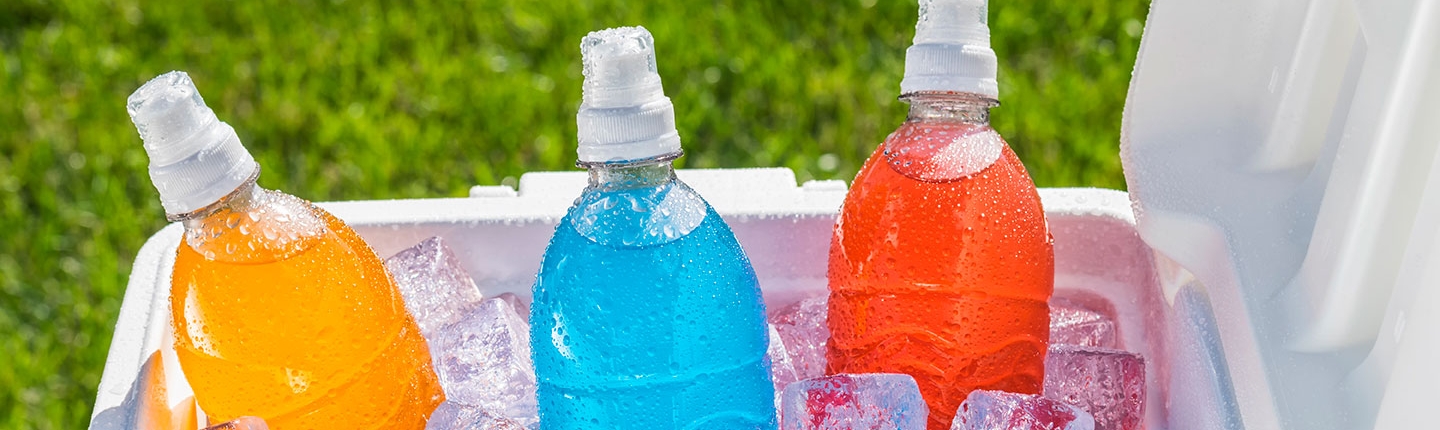
You have probably seen it before: Practice ends and your child grabs a bright sports drink from the cooler. It can seem like the right choice. They worked hard and got sweaty. But as a pediatric dentist, I want parents to know what these drinks can do to teeth. I also want to share simple swaps that can protect your child’s smile.
What is in a sports drink?
Sports drinks are made to replace water, salt and energy during long or very hard exercise. The problem is that many of the same ingredients can be hard on teeth. Most sports drinks have two main concerns:
- Sugar: Many bottles have up to 35 grams of sugar. That is about 8 teaspoons. The American Academy of Pediatric Dentistry says sugary drinks, including sports drinks, can increase the risk of cavities.
- Acid: Many sports drinks use citric acid for flavor and have a pH between 2.7 and 4.0. Tooth enamel can start to break down when the pH is below 5.5. That means each sip can expose your child’s teeth to acid strong enough to wear enamel away.
The American Dental Association says drinks with a low pH can lead to dental erosion.
What is dental erosion?
Dental erosion is not the same as a cavity. Cavities happen when bacteria in the mouth use sugar to make acid. With erosion, acid in the drink attacks the enamel directly, slowly wearing away the hard outer layer of the tooth. Enamel does not grow back, so the damage is permanent.
Early signs of erosion may include:
- Teeth that look thin or glassy at the edges
- Teeth that look more yellow as white enamel wears away
- Teeth that feel sensitive to hot, cold or sweet foods
- Teeth that look flat or have small pits
When erosion gets worse, children may need fillings, crowns or other dental treatment.
The way kids drink sports drinks also matters. Many children sip them slowly during practice, a game or the ride home. This keeps sugar and acid on the teeth for a long time. Teeth need breaks so saliva can wash acid away and help enamel get stronger again.
When are sports drinks okay?
For most kids, sports drinks are rarely needed. They may be useful for older children who are doing very difficult exercise for more than 60 minutes.
For most youth sports, water is the best choice. This includes a 45-minute soccer practice, a swim meet, a bike ride or activities with rest breaks. The AAPD and the American Academy of Pediatrics note that sports drinks do not help most children more than water. Added sugar can also raise the risk of cavities and other health concerns.
If your child is a competitive athlete with long, hard practices, ask their pediatrician or pediatric dentist if a sports drink is needed. They can also help you find ways to protect your child’s teeth.
Simple ways to protect your child’s teeth
You do not have to ban sports drinks to make a difference. These small steps can help:
- Choose water first: For most practices and games, water is all your child needs. If they do not like plain water, try chilling it or adding cucumber. A small slice of fruit is still much better for teeth than a bottle of sports drink.
- Use a straw: If your child has a sports drink, using a straw can help reduce contact with their teeth.
- Do not sip for a long time: Have your child drink it and be done. The longer sugar and acid stay on the teeth, the more harm they can cause.
- Rinse with water afterward: A quick rinse helps wash acid off the teeth. This is an easy habit after a game or practice.
- Wait before brushing: After an acidic drink, wait at least 30 to 60 minutes before brushing. Right after the drink, enamel can be softer. Brushing too soon can wear it down more.
- Use fluoride toothpaste: Brushing twice a day with fluoride toothpaste helps make enamel stronger. Do not skip brushing on busy game days.
- See the dentist regularly: Dental checkups can catch early signs of erosion or cavities. Your dentist can also give advice based on your child’s diet and sports schedule.
The bottom line
Water is the best drink for children before, during and after most physical activity. It hydrates without sugar or acid and it is free. Sports drinks can have a place in certain situations, but for most young athletes, they offer more than kids need and are harder on teeth than parents may realize.
If you have questions about your child’s diet and teeth, talk with their pediatric dentist. They can help you choose drinks and habits that keep your child’s smile healthy.




 https://riseandshine.childrensnational.org/wp-content/uploads/2026/10/dad-brushing-baby-teeth-feature.jpg
300
400
webteam
https://riseandshine.childrensnational.org/wp-content/uploads/2017/11/childrens_riseandshine_logo.jpg
webteam2026-10-12 13:07:252026-10-12 15:15:34How to brush baby and toddler teeth: A parent’s guide
https://riseandshine.childrensnational.org/wp-content/uploads/2026/10/dad-brushing-baby-teeth-feature.jpg
300
400
webteam
https://riseandshine.childrensnational.org/wp-content/uploads/2017/11/childrens_riseandshine_logo.jpg
webteam2026-10-12 13:07:252026-10-12 15:15:34How to brush baby and toddler teeth: A parent’s guide



Leave a Comment
Want to join the discussion?Feel free to contribute!