What is art therapy?
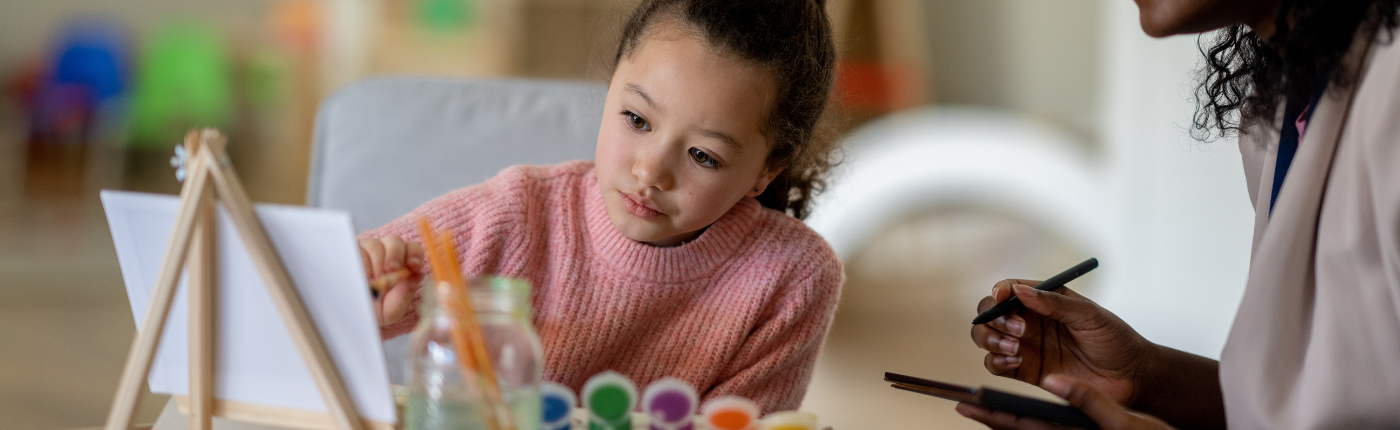
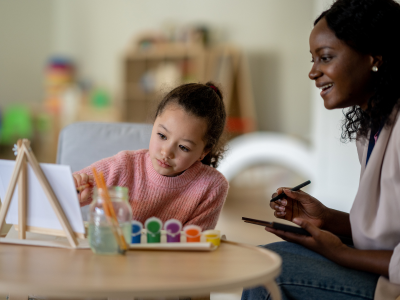
Art therapy is a mental health profession in which a credentialed art therapist uses art-making (drawing, painting, collage, clay, etc.) within a therapeutic relationship to support children’s physical, emotional and social well-being. It’s not “arts and crafts”—it’s therapy that uses creative processes alongside psychological theory to help kids communicate, cope and heal. Art therapists hold graduate-level training and professional credentials.
How is art therapy different from recreational art?
While both can be enjoyable, art therapy is clinical, goal‑directed care delivered by a trained therapist. The art materials, prompts and pace are chosen intentionally to support non‑art goals like emotional regulation, trauma processing, frustration tolerance or supporting independence. Art therapy sessions include art‑making and reflective conversation that connects what a child created to what they’re feeling and experiencing.
Why can art help when words don’t?
Many children—especially when stressed, ill or very young—struggle to put big feelings into words. Visual expression offers a developmentally appropriate, nonverbal channel to explore memories and emotions that may be hard to name. Research and clinical reviews show that creative arts therapies enable safe emotional expression, insight and communication for kids experiencing anxiety, trauma or developmental differences.
How do art therapists choose materials and activities?
Art therapists often use a framework called the Expressive Therapies Continuum (ETC) to help choose art materials and activities based on what a child needs in that moment. The goal isn’t to create a finished piece of art, but to support therapeutic goals through the creative process. Depending on the child, art‑making may help with grounding, coping skills, emotional regulation or working through big feelings. Art therapists are trained to understand how different types of materials and creative activities can support these goals in thoughtful and intentional ways.
For example, squeezing clay or making big, free movements with paint or markers can help children calm their bodies and release built‑up energy. Activities like drawing with simple steps can support focus, problem‑solving and following a plan. More imaginative or symbolic artwork gives kids a safe way to explore big feelings, experiences or questions that may be hard to talk about out loud.
What does a typical session look like in a children’s hospital?
Sessions are individualized. A therapist will assess goals (e.g., coping with hospitalization, processing fear, building choice and control) and plan accordingly. A younger child might explore 2–3 materials and pick what to use to maximize choice; a teen might work more deeply with one medium to practice tolerating imperfection or following through on a plan. After creating, many children talk with the therapist about what their art means to them—turning images into insight in a safe, supported way. This mirrors how licensed clinicians integrate talk therapy with art‑based work.
Can art therapy help children facing serious or chronic medical conditions?
Yes. Hospitalization and doctor’s appointments can feel scary and disempowering. Studies in pediatric medical settings show art therapy can reduce anxiety and distress, improve mood and strengthen communication among kids, caregivers and clinical teams.
In pediatric oncology, systematic reviews and trials suggest art therapy can lessen anxiety and depressive symptoms and support overall coping and quality of life—while giving children a greater sense of autonomy and control during treatment.
How does art therapy support choice and control in the hospital?
Kids in medical care often experience a loss of agency—so art therapy deliberately builds in choices (what to use, what to make, when to pause) and honors the child’s voice. Research highlights that granting control over the art process and inviting free expression are “active ingredients” that help children feel safe, competent and proud—important counterweights to fear and uncertainty in medical settings.
Do siblings and families ever join?
Absolutely. Creative sessions can reduce awkwardness at the bedside, strengthen connection and give siblings and caregivers a shared language when words are hard. Near end‑of‑life, art therapists often facilitate legacy and memory‑making—guided projects (e.g., handprints, altered books, keepsakes) that reflect how a child wishes to be remembered and that support family grief. Legacy work has documented benefits for emotional well‑being, autonomy, and connection.
What benefits can parents reasonably expect?
Art therapy may help children:
- Lower anxiety and fear during hospitalization and procedures. By immersing themselves in the creative process, they can temporarily escape from the challenges of their medical condition.
- Improve mood and coping. Children gain effective coping strategies and resilience-building skills when they engage with art therapy, enabling them to better cope with challenges and transitions in their lives. Art activities create a positive and engaging environment that encourages healing and recovery.
- Enhance communication. Art allows children to express themselves freely when words are hard to find.
(As with all therapies, individual responses vary—especially across diverse diagnoses.)
Who is a good candidate for art therapy?
- Children who like to create—or who resist “just talking”—and need another way to communicate feelings.
- Kids adjusting to new diagnoses, long stays or frequent appointments who could benefit from greater autonomy and consistent coping tools.
- Patients with anxiety, trauma histories or developmental differences who may thrive with sensory‑based and symbolic expression.
No art skills are required—creativity is a vehicle, not the goal.
How is progress measured?
Like other psychotherapies, progress is tracked through ongoing clinical assessment: changes in a child’s ability to identify and manage emotions; reduced distress behaviors; increased flexibility or frustration tolerance; and how well new coping strategies transfer to daily life. Some programs also use observational measures and patient‑reported outcomes in research or quality‑improvement efforts.
How can families find a qualified art therapist outside the hospital?
Tip: The American Art Therapy Association notes that “art therapy” is often misused to describe activities led by non‑therapists. Ask about training, credentials (ATR/ATR‑BC), experience with your child’s age/diagnosis and how they partner with medical or school teams.
When to talk with your pediatrician about art therapy
Consider bringing it up if you notice your child:
- Shutting down or becoming explosive when asked to “talk about it.”
- Showing high medical anxiety or behavioral distress around appointments or procedures.
- Struggling with mood, sleep or school after a new diagnosis, ongoing treatment, grief or trauma.
Your primary care provider can help you weigh options, coordinate referrals and integrate art therapy with other supports.
The bottom line
Art therapy meets children where they are—through lines, colors, textures, stories and symbols—to help them feel safer, more seen and more in control. In the hospital and beyond, it can be a powerful, developmentally attuned way for kids (and families) to process hard things, build resilience and reconnect with the healthiest parts of themselves.




 https://riseandshine.childrensnational.org/wp-content/uploads/2026/04/Art-Therapy-Featured.png
300
400
Danielle Robbins
https://riseandshine.childrensnational.org/wp-content/uploads/2017/11/childrens_riseandshine_logo.jpg
Danielle Robbins2026-04-07 16:28:362026-04-07 16:28:36Art Therapy for Kids: What It Is, How It Helps and When to Consider It
https://riseandshine.childrensnational.org/wp-content/uploads/2026/04/Art-Therapy-Featured.png
300
400
Danielle Robbins
https://riseandshine.childrensnational.org/wp-content/uploads/2017/11/childrens_riseandshine_logo.jpg
Danielle Robbins2026-04-07 16:28:362026-04-07 16:28:36Art Therapy for Kids: What It Is, How It Helps and When to Consider It









Leave a Comment
Want to join the discussion?Feel free to contribute!