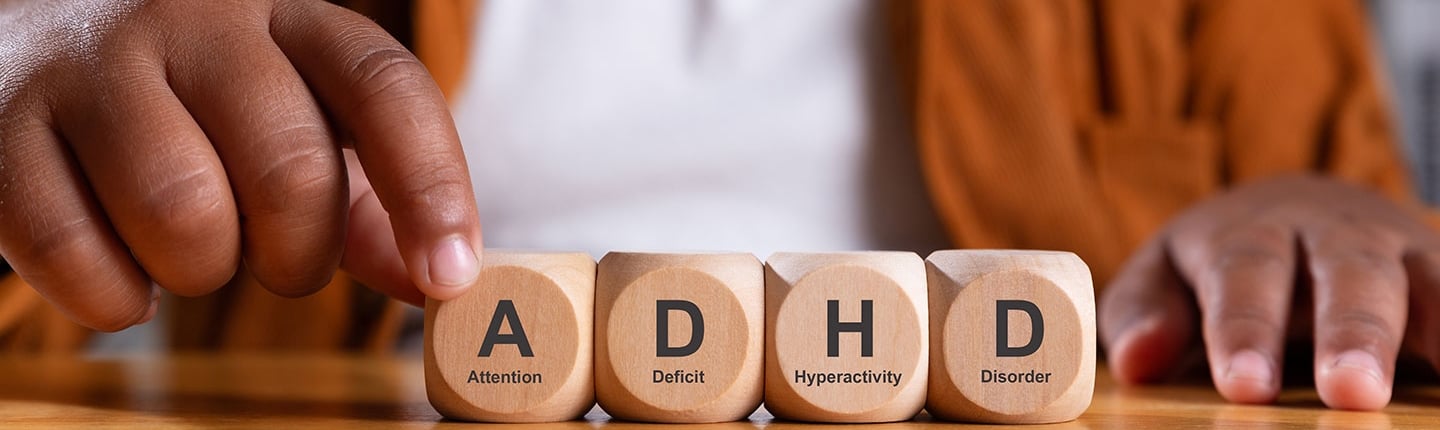
October is ADHD Awareness Month, so we’re sharing a brief overview of ADHD and how it overlaps with autism. Before 2013, diagnostic criteria meant a person could be diagnosed with ADHD or autism, but not both. One reason was the belief that the strong interests associated with autism could not be separated from the attention challenges seen in ADHD. Research and improved testing have since helped experts distinguish the symptoms of ADHD and autism, so a diagnosis of one does not rule out the other. Accurate diagnoses are essential for finding treatments and accommodations that support each person, and having both diagnoses is not unusual.
Research shows significant overlap between autism and ADHD:
- 50% to 70% of people with autism also meet the criteria for ADHD.
- 15% to 25% of people diagnosed with ADHD show signs of autism.
- Symptoms of both ADHD and autism appear early in development. However, girls with either condition are often diagnosed later. Sometimes ADHD symptoms also become more noticeable as a person gets older and life becomes more complicated.
- Genetics plays a role for both, so someone with a diagnosis of either tends to have relatives with similar behaviors.
- People with either diagnosis may have difficulty with executive function skills, such as planning and organization. These challenges can lead to mistakes, frustration, misunderstandings and anxiety.
There are different types of ADHD: primarily inattentive type, which can be easy to miss if a person is quietly distracted; primarily hyperactive/impulsive type, which is what many people think of when they hear ADHD; combined type, which includes inattentive and hyperactive/impulsive symptoms; and other specified or unspecified ADHD, when a person shows a mix of characteristics but does not meet the full criteria for another type. Not everyone with ADHD has the same symptoms.
ADHD symptoms include behaviors we all experience at times. For people with ADHD, however, these symptoms can interfere with daily life and success. They may include:
- Difficulty paying attention, staying focused or avoiding distractions
- Forgetting to do things, misplacing items or losing track of time
- Acting impulsively, interrupting, oversharing or saying or doing things without thinking
- Feeling very restless or active
- Putting off tasks because it is hard to get started, the first step is unclear or the task is forgotten
Autism is characterized by differences in communication, behavior and how a person experiences sensory input.
Autistic people vary widely in how autism presents. Some people work hard to hide, or mask, their differences. Common differences may include:
- Misunderstanding social expectations, making unexpected comments for the setting or being misunderstood
- Repeating behaviors or movements, such as rocking or hand-flapping
- Feeling overwhelmed by certain lights, sounds, touches, textures or smells, or seeking specific textures for comfort
- Having stronger or more focused interests than is typical, which may distract from important but less interesting activities
Having both autism and ADHD can create additional challenges, which may contribute to anxiety. An evaluation is important for accurately diagnosing ADHD and autism. A correct diagnosis can help patients, parents, teachers and care teams identify treatments, accommodations and changes that support success.
If you are concerned that your child may have ADHD, start by talking with your pediatrician. In some cases, your child may be referred for an evaluation. The Division of Neuropsychology at Children’s National can help when neuropsychological testing is needed. Another option is the ADHD & Learning Differences Program at Children’s National, which provides ADHD diagnosis and treatment.
If you are concerned that your child may have autism, start by talking with your pediatrician. They may refer for evaluation with CASD in the Division of Neuropsychology at Children’s National, but other options are available. The Children’s National behavioral health referral guidelines page clarifies all the different pathways for referral for different age groups here. Requests for evaluation with CASD start with the completion of an intake form here. Teamwork can lead to success.



 https://riseandshine.childrensnational.org/wp-content/uploads/2026/10/ADHD-blocks-feature.jpg
300
400
webteam
https://riseandshine.childrensnational.org/wp-content/uploads/2017/11/childrens_riseandshine_logo.jpg
webteam2026-10-16 14:29:142026-10-16 14:29:14ADHD awareness and autism
https://riseandshine.childrensnational.org/wp-content/uploads/2026/10/ADHD-blocks-feature.jpg
300
400
webteam
https://riseandshine.childrensnational.org/wp-content/uploads/2017/11/childrens_riseandshine_logo.jpg
webteam2026-10-16 14:29:142026-10-16 14:29:14ADHD awareness and autism












Leave a Comment
Want to join the discussion?Feel free to contribute!