Every four years, the Olympic Games capture the world’s attention, with this year marking the 25th edition of the Winter Olympics. As a pediatrician, I often hear children talk about athletes they admire — the bobsledders who seem impossibly fast, the ski jumpers who defy gravity, the hockey players who make you “believe in miracles.” While the medals and records are exciting, the greatest value of the Olympics for children lies not in winning, but in the life lessons quietly unfolding behind every event.
The Olympic Games offer powerful, real-world examples of values we hope to nurture in our children — values that support healthy emotional development, resilience and character.
Teamwork and cooperation
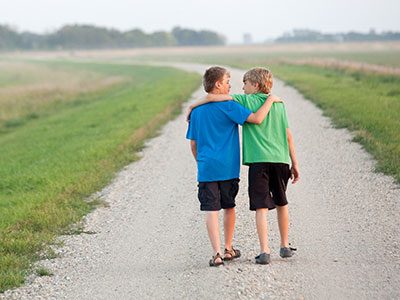
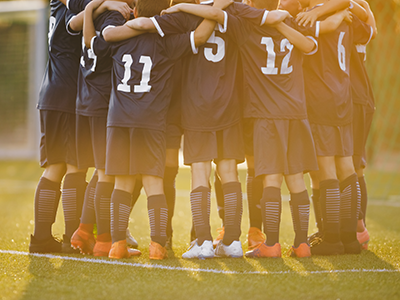
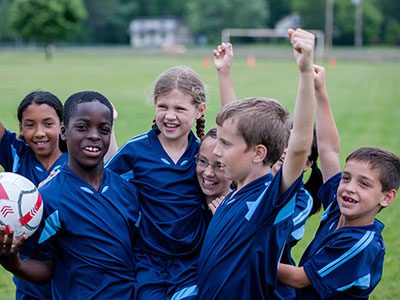
Even in events that appear individual in nature, no Olympian succeeds alone. Behind every athlete is a team of coaches, trainers, medical professionals, family members and teammates. Watching team sports like hockey, curling or relay races highlights the importance of cooperation, communication and trust.
For children, this reinforces a vital lesson: working well with others matters. Teamwork teaches kids to support one another, handle conflict, celebrate shared success and understand that everyone has a role to play. These skills extend far beyond sports — they are foundational for school, friendships and future relationships.
The value of practice and perseverance
Olympians are not born champions. Their success is the result of years — often decades — of consistent practice, discipline and preparation. They wake up early, repeat drills endlessly and work on weaknesses as much as strengths.
This is an important message for children, especially in a world that often emphasizes instant results. The Olympics show that improvement takes time and effort. Whether learning to read, mastering math, playing an instrument or developing athletic skills, steady practice matters more than perfection.
Resilience in the face of setbacks
As a pediatrician, I know how important it is for children to learn how to cope with disappointment. The Olympics provide countless examples of resilience — athletes who fall, miss a routine, lose a race or fail to qualify at first, yet return stronger and more determined.
Children benefit from seeing that setbacks are not failures, but opportunities to learn. Resilience helps kids manage stress, build confidence and develop emotional strength. It teaches them that challenges are part of growth, not a sign to give up.
Not every Olympian wins a medal, but every one of them has already achieved something remarkable just by reaching the Games. Many compete knowing they are unlikely to place first, yet they give their best effort anyway. This reinforces an essential lesson for children: success is not only about the outcome, but about commitment and effort. Learning to persist — even when the odds are long — helps children develop grit, motivation and self-belief.
Sportsmanship, humility and respect
Some of the most meaningful Olympic moments happen after the competition ends — athletes congratulating opponents, showing respect and acknowledging the help they received along the way. True champions demonstrate humility in victory and grace in defeat.
For children, this models healthy self-esteem. They learn that it’s okay to be proud of accomplishments while still being kind, respectful and grounded. Humility helps children form stronger relationships and develop empathy for others.
Patriotism and global perspective
Watching athletes represent their countries can spark a healthy sense of patriotism in children. Seeing flags raised and national anthems played reminds kids that they are part of something larger than themselves.
As adults, we can help frame patriotism as pride paired with respect — loving one’s country while appreciating the diversity, cultures and talents of people from around the world. This balanced perspective encourages both civic pride and global understanding.
A teachable moment for families
The Olympic Games are more than a sporting event — they are a living classroom. As parents and caregivers, we can use these moments to talk with children about effort, character, perseverance and values that support lifelong health and well-being.
When children watch the Olympics, they aren’t just seeing elite athletes. They are witnessing what’s possible when dedication, teamwork, humility and resilience come together — and those lessons can last far longer than any medal ceremony.




 https://riseandshine.childrensnational.org/wp-content/uploads/2019/05/girl-holding-smartphone-and-using-social-media-feature.png
300
400
Rise and Shine
https://riseandshine.childrensnational.org/wp-content/uploads/2017/11/childrens_riseandshine_logo.jpg
Rise and Shine2026-04-02 07:00:202026-04-02 16:23:58Social media tips for parents
https://riseandshine.childrensnational.org/wp-content/uploads/2019/05/girl-holding-smartphone-and-using-social-media-feature.png
300
400
Rise and Shine
https://riseandshine.childrensnational.org/wp-content/uploads/2017/11/childrens_riseandshine_logo.jpg
Rise and Shine2026-04-02 07:00:202026-04-02 16:23:58Social media tips for parents








Leave a Comment
Want to join the discussion?Feel free to contribute!